


Branding trends for 2026 are being shaped by one clear shift. Brands must feel more human, more flexible, and more real in a world driven by AI, automation, and digital noise.
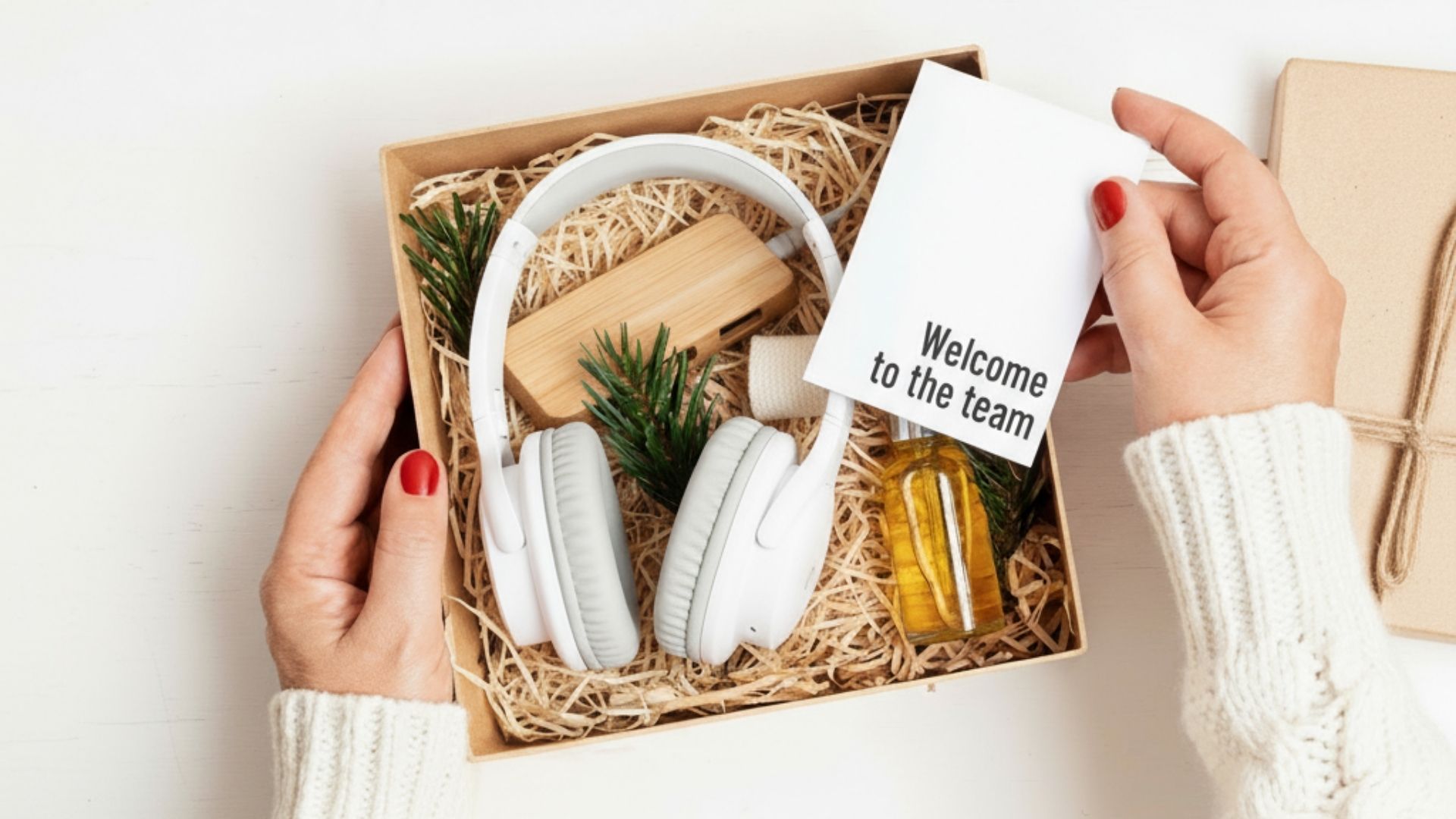
For HR, marketing, and operations teams, this matters more than ever. Your brand is no longer judged only on screens. It is experienced through onboarding packs, event kits, staff gifts, and physical touchpoints that people actually use.
Below, we break down the eight most important branding trends for 2026, what they mean in practice, and how they translate into real-world brand experiences.
Why branding trends for 2026 look different
AI has made content faster and cheaper to produce. As a result, sameness is rising. According to trend analysis from The Brand Strategy Lab and Three rooms, the strongest brands in 2026 will win by doing the opposite.
They will focus on clarity, sensory richness, accessibility, and authenticity. Importantly, they will design brand systems that travel seamlessly from digital channels into physical environments.
1. Minimalist but adaptive brand systems
Brands are simplifying visual identities while making them more flexible. Instead of rigid logo rules, 2026 branding focuses on adaptable systems that work across screens, packaging, merchandise, and environments.
This approach improves recognition without overwhelming the audience. It also allows brands to scale faster across regions and teams.
What this means for merch:
Clean layouts, confident spacing, and brand elements that adapt well across different products, from apparel to packaging.
2. Motion-first branding becomes the default
Motion is no longer an add-on. Brand identities are now designed with movement in mind from the start.
Logos animate. Typography responds. Visual systems behave rather than sit still.
Why it matters:
Most brand interactions now happen on screens. Motion builds memorability and emotional connection.
Merch translation:
Motion-inspired design details like layered prints, tactile finishes, and interactive packaging that echo digital behaviour.
3. Sensory branding goes beyond visuals
Brand identity in 2026 is multisensory. Sound, texture, and touch are increasingly used to strengthen recall and emotional response.
Both articles highlight audio branding and haptic cues as underused but powerful tools.
For physical brand touchpoints:
This is where merchandise plays a critical role. Texture, weight, fabric quality, and finish all influence how a brand is perceived.
4. Human imperfection returns to design
Highly polished, overly perfect design is losing favour. Instead, brands are embracing hand-crafted textures, subtle irregularities, and tactile finishes.
This trend directly counters AI-generated sameness.
Why it works:
Imperfect details feel honest. They signal care, effort, and authenticity.
Best applied to:
Embroidery, woven labels, debossing, natural materials, and limited-run collections.
5. Expressive typography carries brand personality
Typography is no longer just functional. In 2026, it is a core brand asset.
Bold, expressive type systems help brands communicate tone, values, and confidence without relying on complex visuals.
For brand consistency:
Typography that works across digital, print, and merchandise creates instant recognition.
6. Inclusive and accessible design is non-negotiable
Accessibility is now a strategic requirement, not a compliance box.
This includes colour contrast, readability, clear hierarchy, and inclusive visual choices that work for all audiences.
Why this matters:
Accessible design builds trust, improves usability, and reflects strong brand values.
7. AI-assisted creation, human-led strategy
AI is accelerating asset creation, but it is not replacing human judgement.
Both sources emphasise a hybrid approach where AI supports speed, while humans provide direction, empathy, and refinement.
This balance is essential to avoid generic output and maintain brand integrity.
8. Retro-futurism and nostalgic colour palettes
Brands are blending nostalgia with modern execution. Retro-futurist palettes, layered references, and familiar tones are being reworked for contemporary audiences.
Why it resonates:
Nostalgia creates comfort, while modern styling keeps brands relevant.
This trend works particularly well for event merchandise and branded gifting.
What this means for branded merchandise in 2026
For HR, marketing, and operations teams, these branding trends for 2026 highlight one thing clearly.
Merchandise is no longer a side task. It is a core brand channel.
High-quality, well-designed merchandise:
- Reinforces trust
- Extends brand identity into the physical world
- Supports onboarding, events, and culture building
- Reflects brand values through material and finish choices
Cheap, generic items undermine even the strongest brand strategy.
How Swag Hut helps brands apply these trends
At Swag Hut, we believe branding should feel considered, consistent, and effortless.
We help fast-growing teams:
- Translate modern brand systems into physical products
- Design premium merchandise that reflects brand personality
- Handle sourcing, production, storage, and fulfilment end to end
- Deliver branded merchandise that people actually want to use
If your brand is evolving in 2026, your merchandise should evolve with it.
👉 Explore our approach to Premium Branded Merchandise
👉See how we support Onboarding Packs and Event Merchandise
Final thought
Branding trends for 2026 point in one direction. More human. More sensory. More intentional.
Brands that take a joined-up approach between digital identity and physical experience will stand out. Those that treat merchandise as an afterthought will not.
If you are ready to bring your brand to life beyond the screen, Swag Hut is here to help





.jpg)


gv.jpg)


.jpg)


.jpg)
.jpg)
.jpg)
.jpg)
.jpg)
.jpg)

.jpg)
.jpg)


.jpg)


.webp)

.webp)


